How to Anchor an Inflatable Shelter
Anchor an inflatable shelter to the ground it stands on. Use heavy-duty steel pegs and guy lines on grass, and ballast weights such as sandbags or water weights on hard standing. Use every anchor point the shelter provides, keep the lines taut, and take the shelter down in severe wind. Good anchoring is what keeps an inflatable shelter safe and stable.
This guide covers anchoring on grass and hard standing, how many points to use, and how to handle wind safely.
Anchoring on grass and soft ground
On grass you can peg down, which is the most secure option when done properly:
use heavy-duty steel pegs, not lightweight tent pegs
drive them at the correct angle, pulling down and out from the shelter
use every anchor point and guy line the shelter provides
keep lines taut with no slack, and re-check them through the event
flag or cover lines where people walk, to remove trip hazards
Anchoring on hard standing
On tarmac or concrete you cannot peg, so you anchor with ballast:
use sandbags, weight plates or water weights at every anchor point
size the ballast to the shelter and how exposed the site is
plan the weights in advance, because you rarely improvise them on the day
position weights so they are stable and out of walkways and vehicle routes
How many anchor points and how much weight?
Use all of them. If a shelter has reinforced tie-down points along both legs or around the base, they are there to be used, not as decoration. As a rule:
use every anchor point the shelter provides, not just the corners
larger shelters need more anchoring than you might expect, so do not under-do it
match the ballast weight to the size of the shelter and the exposure of the site
if in doubt, add more, and check the product guidance for the specific model
Under-anchoring is the most common mistake, and the one most likely to cause a problem.
Wind and safety
Anchoring is a safety job, not a formality. Keep an eye on the forecast and the conditions on the day, and be ready to act:
check anchoring at the start of each day on a multi-day event
watch for changes in wind direction, which can load the shelter differently
take the shelter down in genuinely severe wind rather than trying to ride it out
keep lines and weights clear of runners, riders, vehicles and crowds
A well-anchored shelter is stable and safe. No branding or schedule is worth leaving one up in unsafe conditions.
The INFL8 range
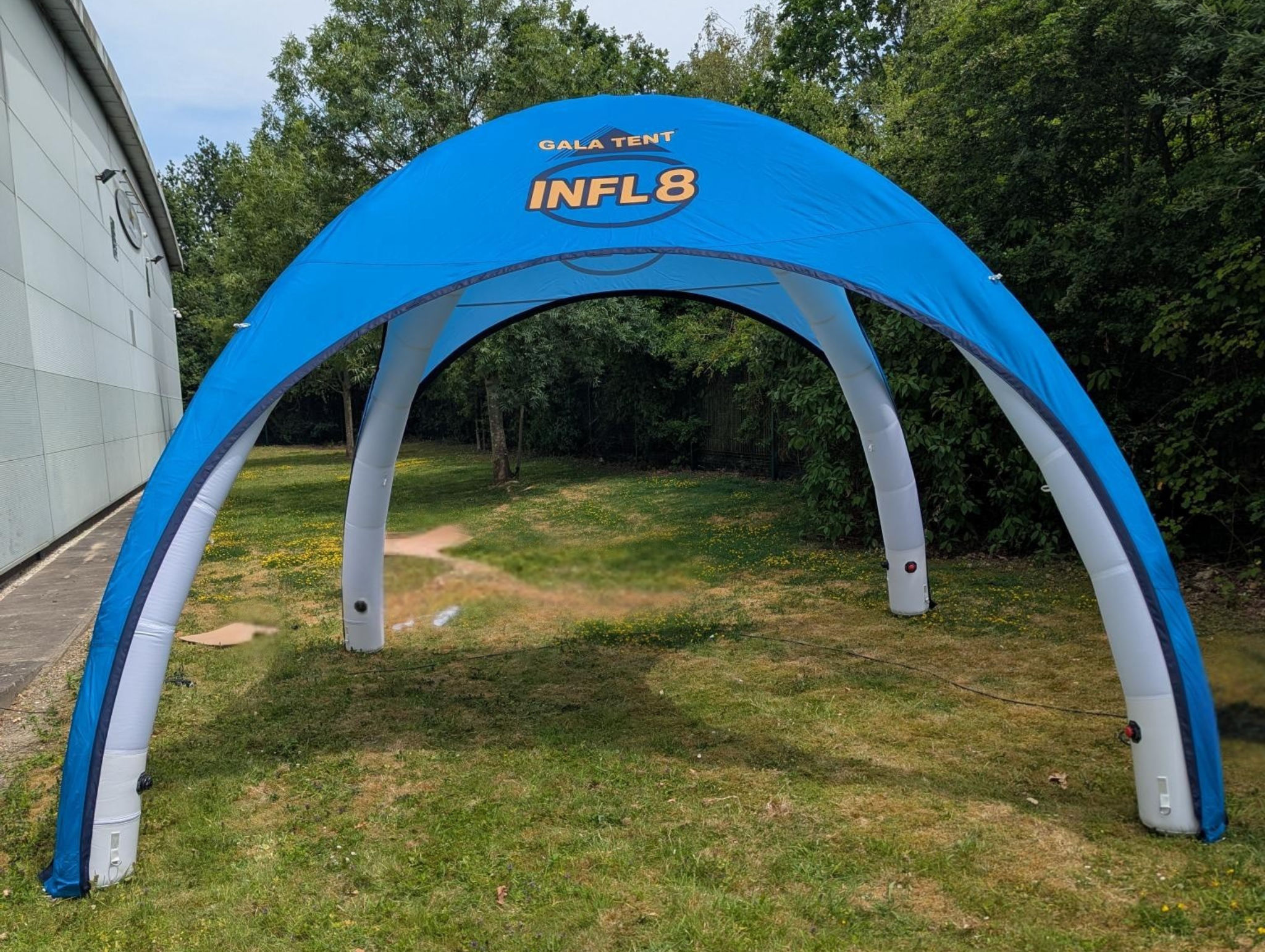
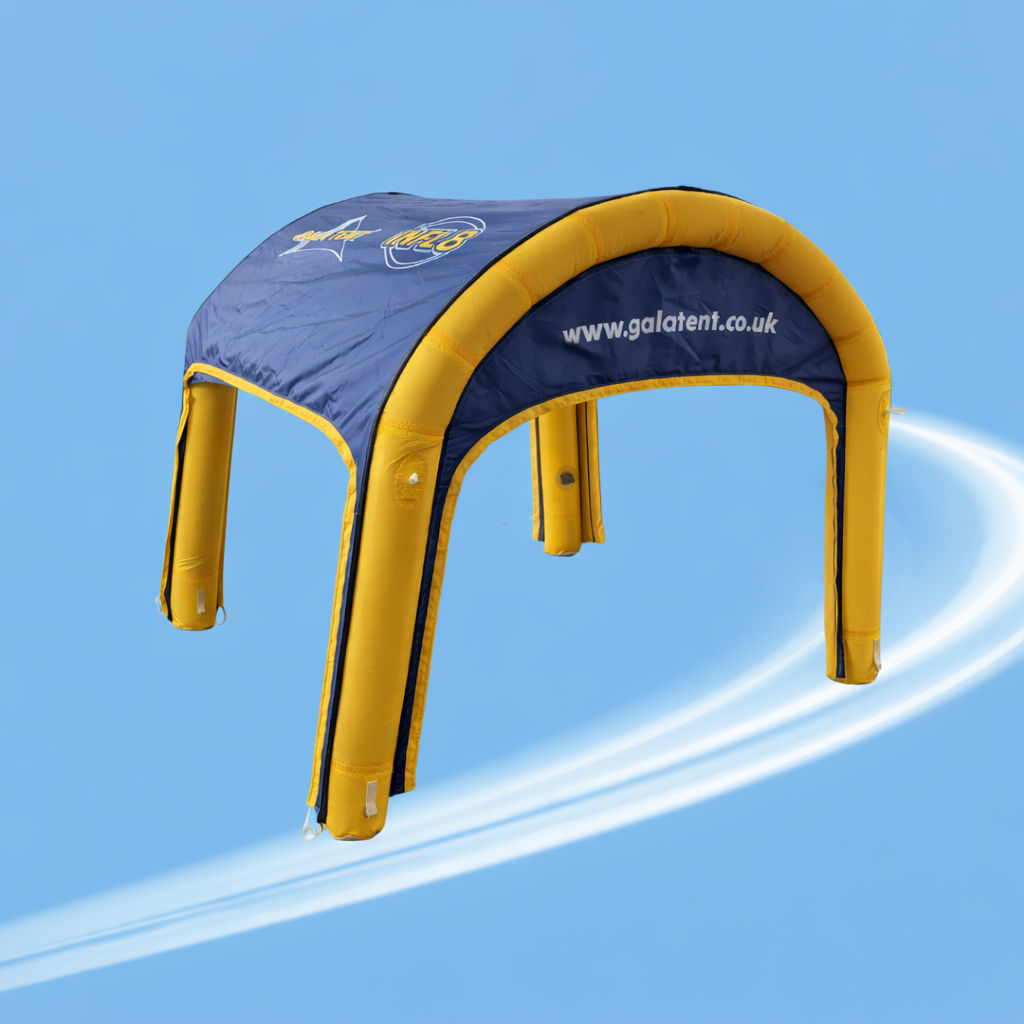
Every INFL8 shelter comes with a tie-down kit and reinforced anchor points. Explore the inflatable domes, inflatable gazebos and inflatable arches ranges, or start with the inflatable shelters buying advice hub.
3 of 3 products
No products match these filters.
Frequently Asked Questions
How do you anchor an inflatable shelter on grass?
Use heavy-duty steel pegs driven at the correct angle, pulling down and out, at every anchor point and guy line. Keep the lines taut with no slack, and flag them where people walk.
How do you anchor an inflatable shelter on concrete or tarmac?
You cannot peg, so use ballast: sandbags, weight plates or water weights at every anchor point, sized to the shelter and the exposure of the site. Plan the weights in advance and keep them out of walkways.
How many anchor points should I use?
All of them. Use every reinforced tie-down point the shelter provides, not just the corners. Larger shelters need more anchoring, so check the product guidance for the specific model.
How much weight do I need to anchor an inflatable shelter?
Match the ballast to the size of the shelter and how exposed the site is, and use every anchor point. If in doubt, add more, and follow the guidance for the specific model.
Can an inflatable shelter stay up in the wind?
A well-anchored shelter is stable in normal conditions, but like any event structure it should be taken down in genuinely severe wind. Check anchoring regularly and act early if conditions turn.