Inflatable Arches for Cycling and Triathlon Events
Inflatable arches mark the start, finish and transition points at cycling and triathlon events. On a bike course, width and clear anchor lines matter more than anywhere else, because riders come through in groups, carry speed and cannot stop or swerve suddenly. For most events the right choice is a wide sealed-air arch, anchored so no line sits in the rider corridor, and branded boldly for the finish shot.
This guide covers why width is the first decision on a bike course, how to keep anchor lines away from riders, and how to mark start, finish and transition zones.
Why width matters more on a bike course
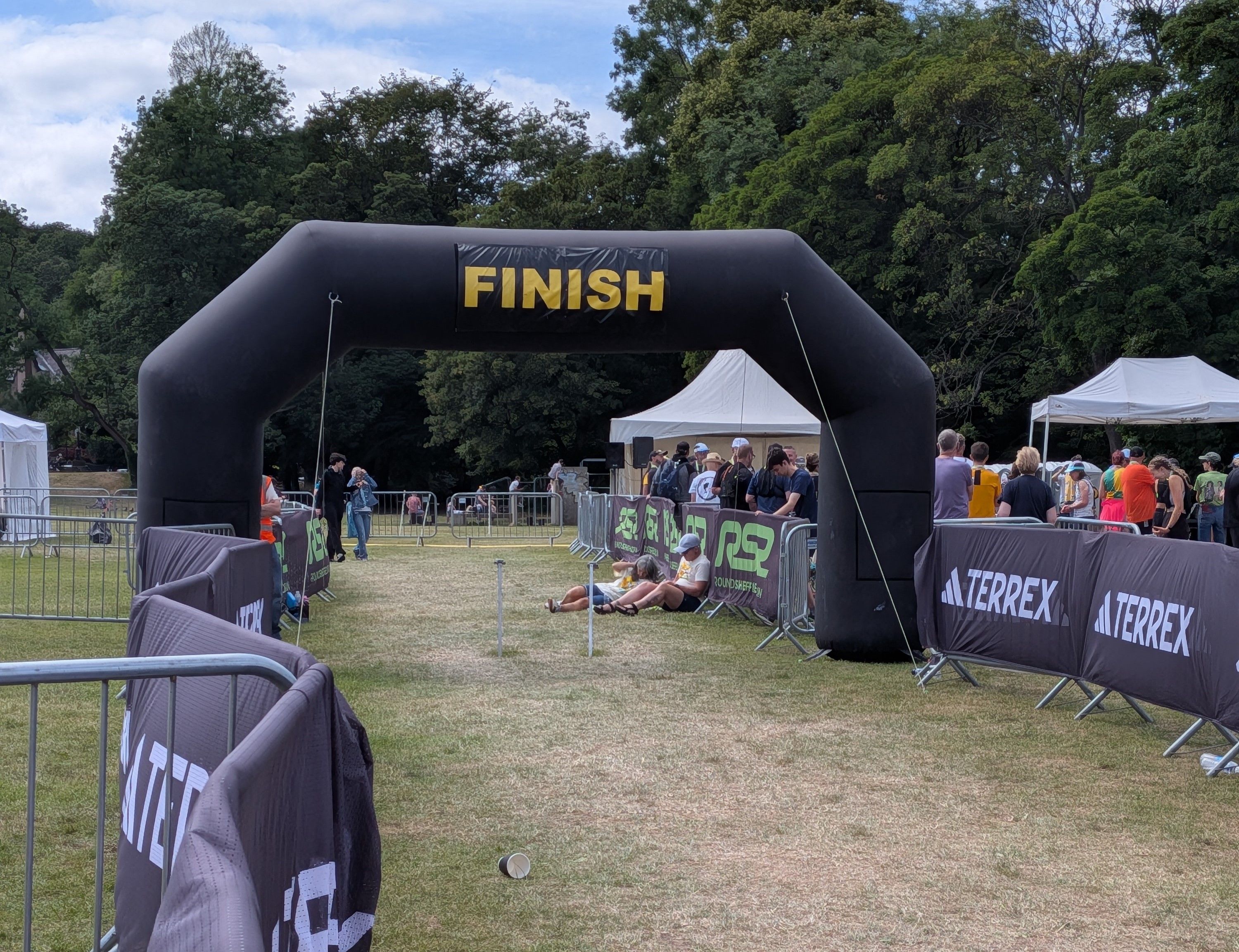
The single biggest difference between a running arch and a cycling arch is width. Riders arrive in bunches, hold speed through the line, and have little room to react to route furniture. An arch that would be fine at a 10k can become a pinch point on a bike course.
As a rule, choose a wider arch than you would for a running event of the same size, and give the racing line clear space on both sides. Anywhere crowd barriers, timing gantries or feed stations sit near the arch, plan the layout so riders are never squeezed toward an anchor point.
What size arch for a cycling or triathlon event?
Size from the width of the racing line and the volume of riders coming through together. On a bike course, err wider.
| Arch width | Best for | Typical events |
|---|---|---|
| 6m wide | Narrow, low-volume or club use only | small club time trials, closed private courses |
| 8m wide | The practical minimum for most bike courses | sportives, local road races, triathlon finishes |
| 12m wide | Mass starts and major finishes | big sportives, city criteriums, headline finish lines |
For a mass start where hundreds set off together, width is a safety feature as much as a visual one.
Keeping anchor lines clear of riders
This is the part that matters most on a bike course. An anchor line at handlebar height, or a peg in the racing line, is a serious hazard when riders are travelling at speed in a group.
Plan anchoring so that:
no guy line crosses the rider corridor at any height a rider could catch
anchor points sit well outside the racing line, not just off the edge of it
lines and weights are flagged and, where needed, marshalled
the layout is walked and ridden before the event to check sightlines
On hard standing you will use ballast rather than pegs, so position the weights where they are stable and clearly out of the way. If the wind picks up and anchoring cannot stay clear and secure, the arch comes down.
Marking start, finish and transition
Start
Give the bunch room to roll out safely. A wide arch clears the group off the line without funnelling riders toward the edges, and keeps the opening obvious for a neutralised or rolling start.
Finish
The finish is the photo and the sponsor moment. A tall, wide arch frames the sprint, houses the timing gantry, and puts the headline brand in the finishing shots. This is where to spend the budget.
Transition (triathlon)
Arches make busy transition areas readable, marking swim-to-bike and bike-to-run entries clearly so athletes flow the right way under pressure. Clear wayfinding here prevents bottlenecks.
Sealed-air keeps the course clean
A sealed-air arch is inflated once and stays up on its own, which suits a course where you do not want cables or blowers anywhere near moving riders. There is no motor noise over the start and finish, no power feed to find on an open course, and the arch holds its shape from first rider to last.
The INFL8 arch range for cycling and triathlon
Every INFL8 arch is sealed-air, printed edge to edge and packs into a wheeled bag for transport. On a bike course, favour the wider options. See the full inflatable arches range, or read the complete inflatable arches guide for sizing, series and anchoring in more depth.
8m Sprint arches
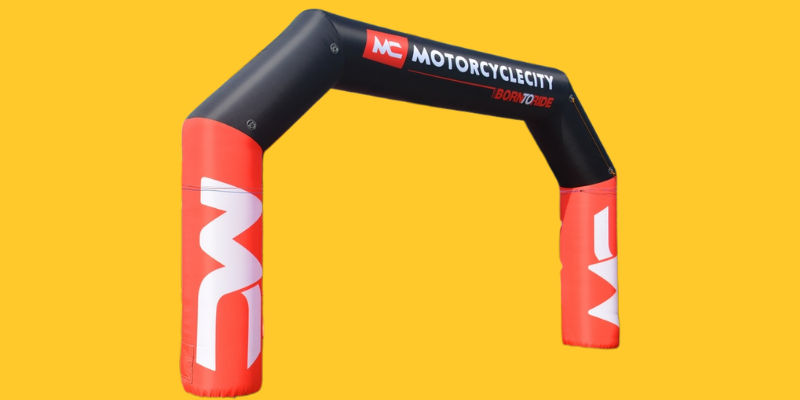
The practical minimum for most bike courses. Enough width for sportives, road races and triathlon finishes.
12m Elite arches
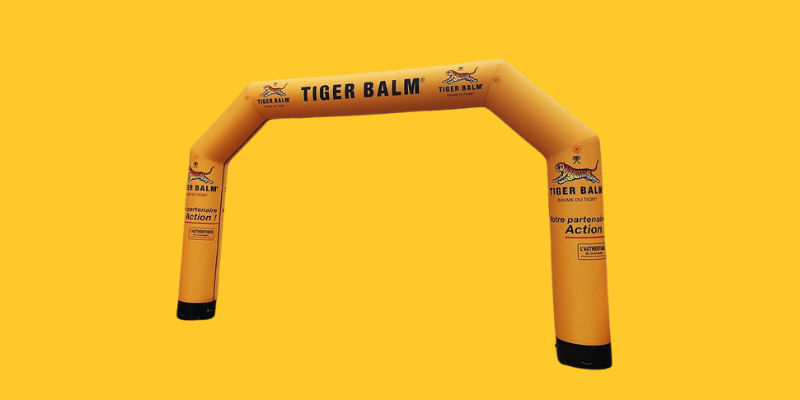
The headline finish for mass starts, big sportives and city centre criteriums that need full width.
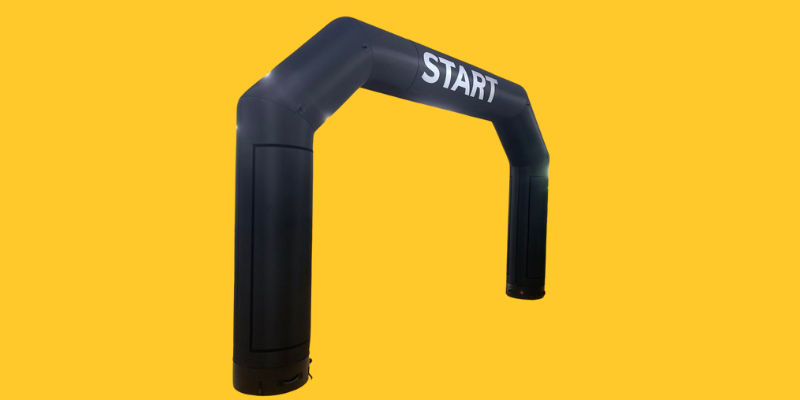
6m Club arches
For narrow, low-volume or club use only, such as small time trials and closed private courses.
Shop inflatable arches for cycling and triathlon
Choose your width and series below, or talk to us about layout, branding and lead times.
3 of 3 products
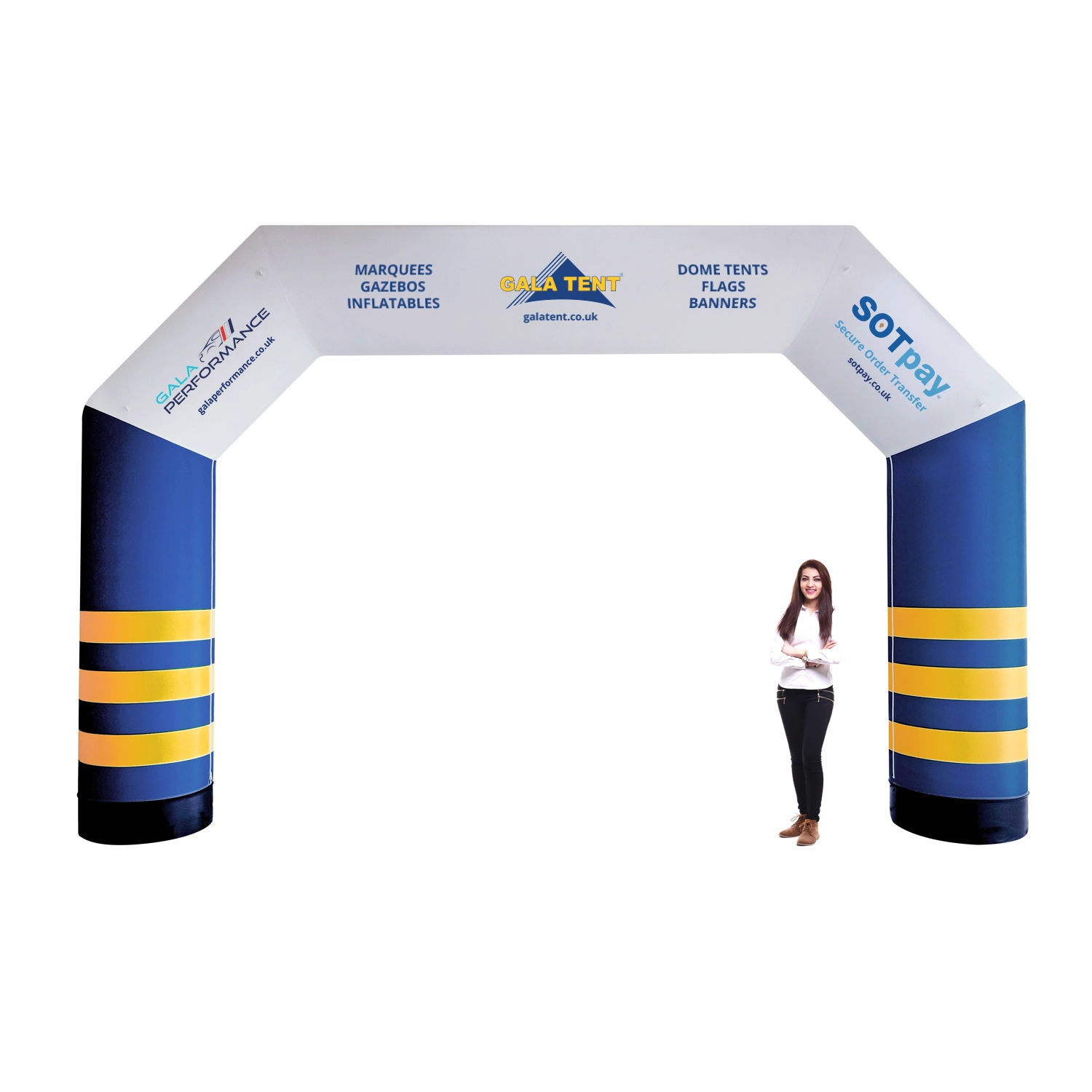
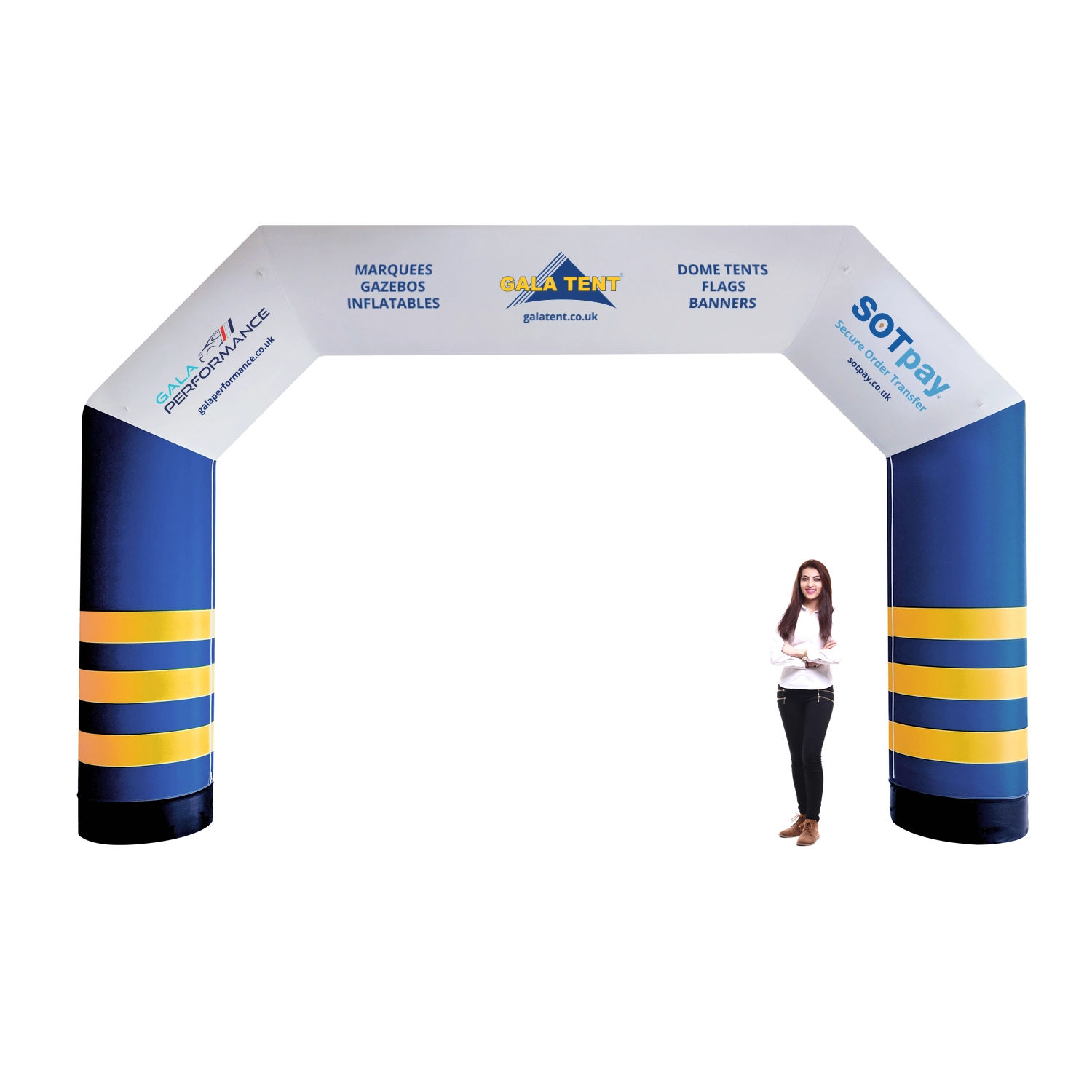
No products match these filters.
Related arch use cases
Running event arches for race start and finish lines
Motorsport arches for paddock entrances and sponsor gateways
Festival and event entrance arches for gateways and wayfinding
Frequently Asked Questions
What width inflatable arch do I need for a cycling event?
Treat 8m as the practical minimum for most bike courses, and use 12m for mass starts, big sportives and major finishes. Only use 6m for narrow, low-volume or club setups. On a bike course, choose wider than you would for a running event of the same size.
How do you keep anchor lines clear of riders?
Route every guy line well outside the racing line so nothing crosses the rider corridor at any catchable height, keep anchor points and weights clear of the line, flag and marshal them, and walk or ride the layout before the event to check it.
Can an inflatable arch span a closed road?
Yes, within its width. Choose an arch wide enough for the carriageway and the volume of riders, and confirm the height clearance for any vehicles that need to pass under it, such as lead cars and support vehicles.
Do cycling arches need a blower or power on the course?
No. Sealed-air arches are inflated once and stay up on their own, which keeps cables and motors away from moving riders and removes the need for a power feed on an open course.
Can arches mark a triathlon transition area?
Yes. Arches make busy transitions readable by clearly marking swim-to-bike and bike-to-run entries, helping athletes flow the right way and preventing bottlenecks.
Are inflatable arches waterproof for a wet event?
Yes. INFL8 arches are made from waterproof, UV-resistant Dacron built for repeated outdoor use in changeable British weather.